 18 Dec, 2025


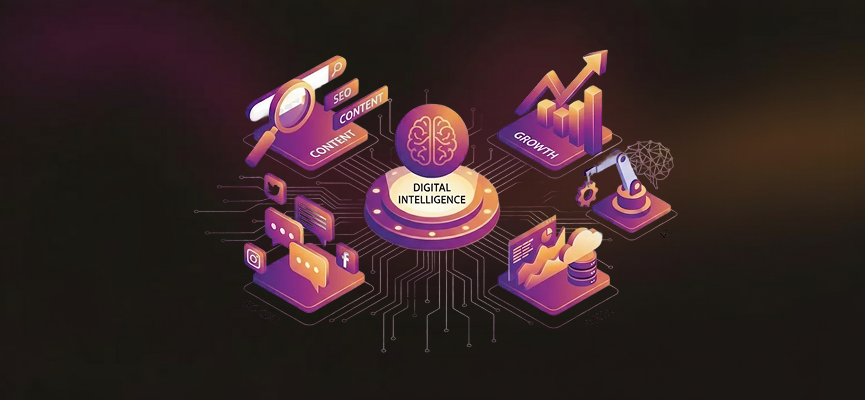
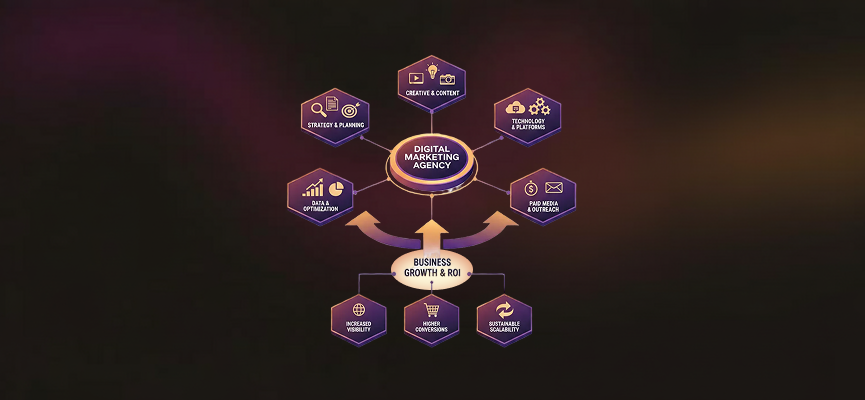
Marketplace is moving towards the speed of scrolling. Consumers want to switch quickly between devices and apps, and want to make their online experience exceptional. Traditional marketing methods create bigger chaos and no longer meet the demands of consumers’ behaviour. This significant shift turned marketing into a critical engine for visibility, engagement, & long-term growth
As industries become more competitive, global markets are shifting towards digital marketing to serve precision, measurability, & scalability. From content creation, data-driven campaigns to personalized customer journeys, businesses are leveraging digital strategies in a crowded marketplace.
In this blog post, we will understand how digital marketing empowers brands and what companies must focus on to thrive in 2025 and beyond.
This section attempts to provide readers with the rationale behind digital marketing, and how it has fundamentally changed the competitive landscape, for the better, for all marketers.
The Digitization of Consumer Behavior
According to recent statistics, over 5.4 billion people use the internet. The use of mobile devices is expected to increase the number of users in the coming years. Users can research a product, compare its price to other brands, read reviews, and make a decision to buy the item from an offline store. From that, it can be seen that the internet is greatly integrated into the process of purchasing a product. The following statistics can help illustrate the point.
As a result of this trend, businesses with inadequate digital presence are at a disadvantage and will lose potential buyers before the very first conversation begins.
Equal Opportunity in Digital Marketing
Small and medium-sized businesses can now compete and win customers over from large corporations. Digital marketing has leveled the playing field by providing data-driven consumer targeting, budget allocation, and performance. Digital marketing has made it possible for businesses to use the following advantages:
With traditional advertising, such as billboards, print ads, or radio, results are simply estimated; they are not measurable. This is not the case with digital marketing. In digital marketing, every interaction with the advertisement is measurable, and results can be estimated with high degrees of accuracy.
Businesses track the following data, i.e, Conversions, Cost per Acquisition (CPA), Return on Ad Spend (ROAS), Click-Through Rate (CTR), User Engagement, and Attribution Paths. This precision empowers companies to make decisions based on data instead of assumptions.
Cost-Effective Marketing With A Higher Return on Investment
Digital marketing campaigns are significantly less costly than traditional advertising. Digital marketing also offers better ROI targeting through content marketing, SEO, email automation, and remarketing (or retargeting) strategies, which are more economical than traditional advertising.
Media platforms that offer paid advertising, such as TikTok, LinkedIn, Meta, and Google Ads, employ machine learning to enhance ROI, minimize ad spend, and identify better-targeted prospects.
Rapid Adaptation in a Fast-Changing Environment
In competitive environments, speed is critical. Digital marketing enables fast and seamless adjustments through: refining audience targeting, modifying marketing messages, optimizing landing pages, managing performance budgets, and capturing/using customer sentiment to guide resource deployment. Digital marketing enables brands to adapt to the changing marketplace.
Customers Expect Personalization
Today’s consumers expect a personalized experience. Digital marketing allows for the delivery of more customized experiences through personalized ad campaigns, individualized product suggestions, automated email marketing campaigns based on user behavior, customized website content, and targeted marketing efforts.
As consumers expect personalized experiences more than ever in marketing, personalized experiences drive higher levels of user engagement, higher conversion rates, and enhanced customer loyalty.
Evidence Based Decision Making Enhances Strategy
Digital marketing provides actionable insights to companies, such as:
Brands that employ evidence and data outperform others that use outdated strategies or rely on guesswork.
Need for Multiple Fourth Brands To Stay Competitive
Customers interact through
Digital marketing ensures that there is a brand presence throughout the entire customer journey, increasing customer confidence and improving sales
Social Proof Drives Reputation and Decisions Online
Testimony, certification, influencer endorsement, and social content collateralizing the product or service have a profound impact on the consumer’s purchasing decision
Research confirms:
Integration of AI and Automation Enhances Marketing Performance
AI predicts user behavior while automating and optimizing advertising, data analysis, and personalization of user experience
Automation focuses on:
Businesses that integrate AI into their digital strategies outperform their competition that rely on outdated manual processes.
Here, we will understand the various digital marketing techniques that provide a competitive edge that including:
Search Engine Optimization (SEO)
SEO strategies allow brands to target specific consumers. Google is one of the most prominent search engines, becoming a top result is critical. Especially considering that people conduct over 8.5 billion searches every single day. It is highly sought after, but vital to SEO to establish credibility over time.
Content Marketing
Content marketing involves the creation of blog articles, informative videos, how-to guides, and social media postings that educate consumers, build brand trust, and persuade them to make purchases.
Social Media Marketing
Meta, LinkedIn, Instagram, YouTube, and TikTok enable social media marketers to tell a brand’s stories, establish marketing funnels, and promote sales to target markets.
Paid Advertising (PPC)
Paid advertisements are very efficient and effective because they are able to target and reach prospective customers who are ready to make purchases.
Email Marketing and Marketing Automation
Marketers utilize automated email responses to nurture potential customers, retain current customers, and increase their lifetime value.
Conversion Rate Optimization (CRO)
CRO allows brands to gain the most value from current website visitors, reducing acquisition costs and improving return on investment.
Analytics & Performance Management
Data tracking allows brands to spend marketing budgets in smarter ways and optimize their marketing strategies.
Not understanding the importance of digital marketing creates various issues, such as:
Digital marketing is the most pivotal part of a business’s marketing strategy and overall growth.
The marketplace rewards speed, intelligence, and relevance. Digital marketing helps companies identify the ideal audience, achieve measurable results, and foster relationships with clients quickly and more deeply than before.
Those brands that will benefit from the positive returns from investments with more digital footprint, AI marketing, and integrations, or a consolidated marketing approach. The hesitation will for sure come with a lack of visibility, and loss to the competitors in the market, and with the customers
Why is digital marketing important today?
Because consumers are living their lives online. It enables brands to reach their marketing audience and allows companies to track their performance, optimize marketing spend, and more efficiently scale.
Is digital marketing more cost-effective than traditional marketing?
Absolutely. The digital domain is far more cost-effective and offers greater ROI as it enables more targeted campaigns and more cost control.
What industries are benefiting from digital marketing?
All industries benefit. Retail, healthcare, finance, education, software as a service, and manufacturing all rely on digital marketing for business visibility.
How quickly can results be achieved?
For paid media, results are almost immediate, but with SEO, depending on the competition and how well the strategy is executed, results can be achieved over a few weeks to months.
What is the most significant benefit of digital marketing?
A measurable return. Companies clearly understand which tactics are effective, which are not, and what should be streamlined for the greatest return.
In what way does artificial intelligence (AI) affect digital marketing?
AI provides advanced predictive data and improves workflow automation, personalization, and return rate optimization, all of which lead to more effective and productive campaigns.